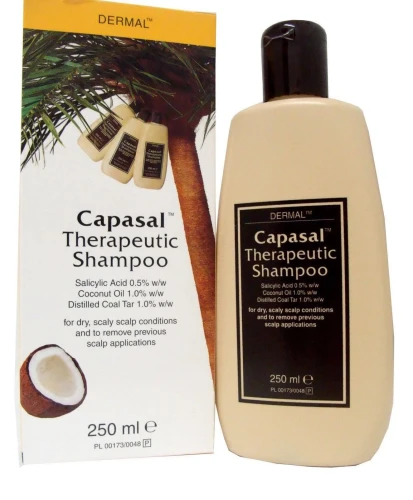

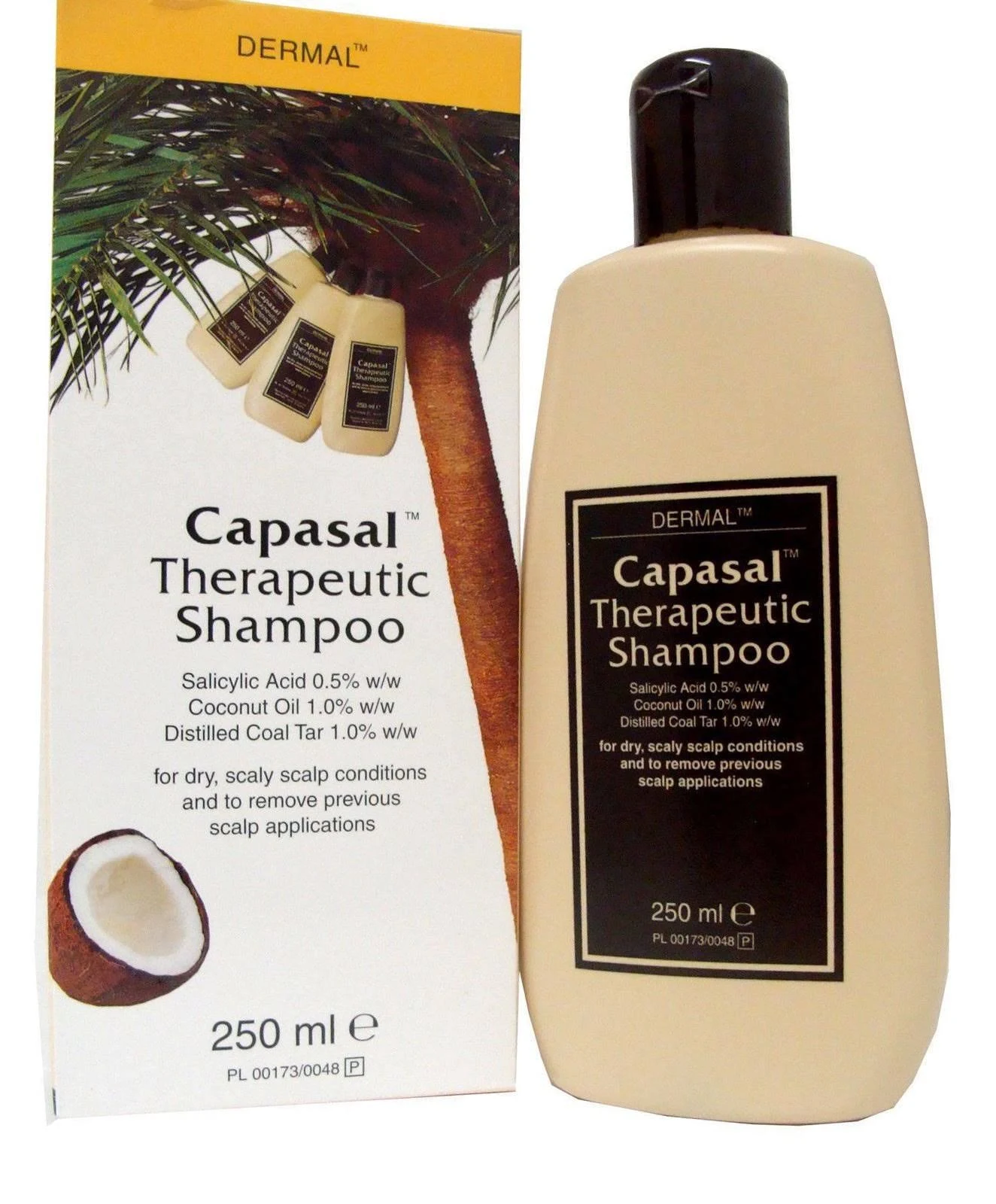
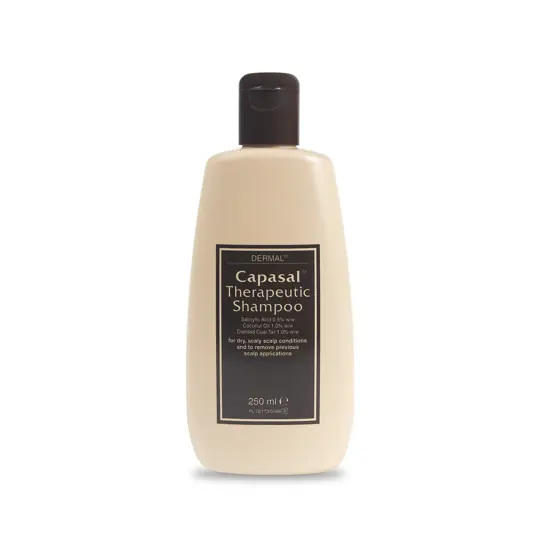


Capasa Therapeutic Triple-action Shampoo for Dry, Scaly Scalp Conditions such as Psoriasis, Cradle Cap, Seborrhoeic Dermatitis Eczema and Dandruff 250ml
Kod produktu: DERMAL1

Dodaj kolejne produkty do koszyka.
Raty Przelewy24 będą dostępne w koszyku.
Deklarowana dostawa DO PUNKTU ODBIORU - do 48 godzin od DNIA WYSYŁKI w dni robocze. UWAGA - czas realizacji (wysyłki) zamówienia - od 5 do maksymalnie 12 dni
Koszty dostawy wybranego produktu
-
Kurier InPost 20,00 zł
Deklarowana dostawa do 48 godzin od DNIA WYSYŁKI w dni robocze. UWAGA - czas realizacji (wysyłki) zamówienia - od 5 do maksymalnie 12 dni
-
Paczkomat InPost 19,00 zł
Deklarowana dostawa do 48 godzin od DNIA WYSYŁKI w dni robocze. UWAGA - czas realizacji (wysyłki) zamówienia - od 5 do maksymalnie 12 dni
-
KURIER DPD 23,00 zł
Deklarowana dostawa do 48 godzin od DNIA WYSYŁKI w dni robocze. UWAGA - czas realizacji (wysyłki) zamówienia - od 5 do maksymalnie 12 dni
-
PUNKT ODBIORU DPD 13,00 zł
Deklarowana dostawa DO PUNKTU ODBIORU - do 48 godzin od DNIA WYSYŁKI w dni robocze. UWAGA - czas realizacji (wysyłki) zamówienia - od 5 do maksymalnie 12 dni
Cena dostawy dotyczy tego produktu (w wybranym wariancie - jeśli dotyczy). Może się ona zmienić po dodaniu innych produktów do koszyka.
Zapytaj o produkt
Administratorem danych osobowych jest British Shop in Warsaw (Fish and Chips Spółka z o.o.). Przetwarzamy je w celu przesłania odpowiedzi na zapytanie. Więcej informacji dotyczących przetwarzania danych osobowych znajduje się w polityce prywatności.
Udostępnianie karty produktu



Opis
Triple-action shampoo for dry, scaly scalp conditions such as psoriasis, cradle cap, seborrhoeic dermatitis/eczema and dandruff. Capasal Therapeutic Shampoo may also be used to remove previous scalp applications.
‘Capasal’ is a trademark.
About scalp conditions
Dandruff, seborrhoeic eczema (also known as cradle cap in babies) and scalp psoriasis are the most common scalp conditions. These can be recognised from diagnostic signs such as flakes of skin in the hair, pink and itchy areas on the scalp or dense scaling on the scalp. The causes of dandruff, eczema and psoriasis are still unknown.
Shampoos are popular for the treatment of scalp conditions. In dandruff and seborrhoeic scalp conditions, a yeast (which is normally present on the scalp) can proliferate and make the condition worse. Health professionals may recommend a shampoo, which is active against this micro-organism.
Below is a text only representation of the Patient Information Leaflet (ePIL). ALWAYS READ THE LEAFLET ENCLOSED
1. What Capasal Therapeutic Shampoo is and what it is used for
- Capasal Therapeutic Shampoo is a treatment for dry, scaly scalp conditions such as:
- seborrhoeic eczema / seborrhoeic dermatitis (patches of red, scaly, itchy skin);
- pityriasis capitis (severe dandruff);
- cradle cap (thick, yellowish, scaly scalp rash in babies and infants), and;
- psoriasis (areas of raised, red, sometimes itchy, patches of skin, covered with silvery scales, without any blistering or tenderness).
- Capasal Therapeutic Shampoo can also be used to remove other medicines applied to the scalp.
- Capasal Therapeutic Shampoo is for use by adults, the elderly, children, infants and babies.
- This product contains three active ingredients:
- salicylic acid to remove scaly, flaky skin;
- coconut oil to soften, moisturise and lubricate the scalp, and;
- distilled coal tar to stop itching and restore normal skin development.
2. What you need to know before you use Capasal Therapeutic Shampoo
Do not use Capasal Therapeutic Shampoo
if you are allergic (hypersensitive) to salicylic acid, coconut oil, distilled coal tar or any of the other ingredients of Capasal Therapeutic Shampoo listed in Section 6.
Warnings and precautions
Take special care when using this product: Keep the undiluted shampoo, and the lather, away from the eyes.
Capasal Therapeutic Shampoo contains 0.15 mg of sodium benzoate in each gram of shampoo. Sodium benzoate (E 211) may cause local irritation. Sodium benzoate may increase jaundice (yellowing of the skin and eyes) in newborn babies (up to 4 weeks old).
Other medicines and Capasal Therapeutic Shampoo
This product is not known to affect, or to be affected by, any other medicines.
Pregnancy and breast-feeding
This product can be used during pregnancy and whilst breast-feeding. The ingredients have been in widespread use in this and similar preparations for many years, without reports of problems. However, safety trials have not been conducted.
Driving and using machinery
Using this product is not known to affect your ability to drive or use machinery.
3. How to use Capasal Therapeutic Shampoo
Always use this medicine exactly as described in this leaflet or as your doctor, pharmacist or nurse has told you. Check with your doctor, pharmacist or nurse if you are not sure.
Use Capasal Therapeutic Shampoo only to treat the scalp conditions that it is intended for.
Use as a shampoo until the scalp looks and feels better or as recommended by your doctor, pharmacist or nurse. Capasal can be used daily if required, reducing frequency of use to once or twice a week as your condition improves. Thereafter, occasional use may be necessary.
The product, or the lather, may cause irritation if it gets into the eyes. If this happens, rinse with plenty of water. If rinsing one eye, take care to avoid washing product into the other eye. If irritation persists, contact a doctor or hospital. Do not worry if you use too much shampoo, simply rinse hair under running water and continue as instructed above. Do not worry if you occasionally forget to use this product, just carry on using it when you remember. If there is no improvement after 4 weeks, or if your scalp condition seems to look or feel worse, discontinue use of the product and consult your doctor, pharmacist or nurse. If you have any further questions on the use of this medicine, ask your doctor, pharmacist or nurse.
4. Possible side effects
Like all medicines, Capasal Therapeutic Shampoo can cause side effects, although not everybody gets them. This product has been specially designed for use on dry or problem skin, but in some rare cases it can cause irritant or allergic skin reactions on extremely sensitive skin. These rare effects tend to occur during or soon after the first few uses.
Reporting of side effects
If you get any side effects, talk to your doctor, pharmacist or nurse. This includes any possible side effects not listed in this leaflet.
5. How to store Capasal Therapeutic Shampoo
- Keep this medicine out of the sight and reach of children.
- Always replace the cap tightly after use.
- Keep the bottle in the outer carton.
- Keep away from direct sunlight.
- Do not store the product above 25°C.
- Do not use this medicine after the expiry date which is stated on the bottle and carton after EXP. The expiry date refers to the last day of that month.
- Do not throw away any unused medicines via wastewater or household waste. Ask your pharmacist how to throw away any medicines you no longer use. These measures will help to protect the environment.
6. Contents of the pack and other information
This leaflet was last revised in March 2024.


 Zaloguj przez Google